






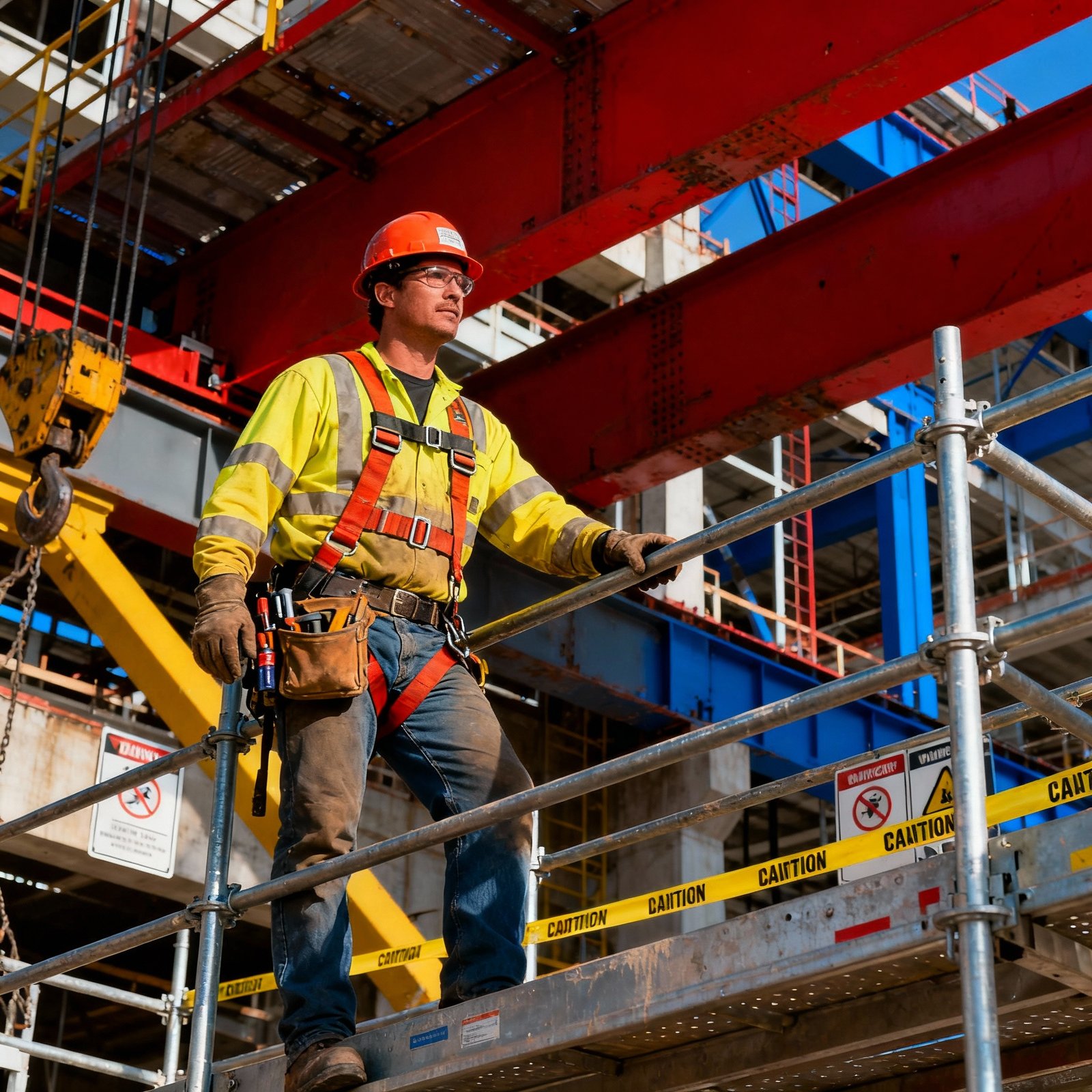
Falls remain the leading cause of construction injuries and fatalities each year. For contractors working in the refractory and industrial maintenance sectors, where elevated platforms and confined furnace environments are common, the risk is especially high. Recognizing this ongoing hazard, OSHA introduced updated fall protection standards effective January 2025. The revisions aim to tighten compliance requirements and improve safety outcomes in high-risk settings.
Why Fall Protection Matters More Than Ever
According to recent data from the Bureau of Labor Statistics, falls account for roughly one-third of all construction-related deaths. In refractory and contracting work, tasks often involve scaffolding, catwalks, and temporary structures—conditions where a single misstep can lead to severe injury or worse. Proper fall protection is not just a regulatory requirement but a moral and operational imperative for maintaining a safe jobsite.
What’s New in the 2025 OSHA Updates
The 2025 OSHA standard revisions mark the most significant changes since the 2016 Walking-Working Surfaces rule. Key updates for contractors include:
- Expanded requirements for personal fall arrest systems (PFAS), including anchorage validation and inspection frequency.
- New training and retraining schedules, ensuring all workers receive documented instruction on updated standards.
- Revised threshold heights for certain maintenance tasks, particularly in industrial furnace and kiln environments.
- Mandatory site-specific fall protection plans for contractors performing elevated work over six feet, tailored to each project’s layout and hazards.
- Enhanced recordkeeping and digital reporting of incidents or near-misses involving fall hazards.
Implications for Refractory and Industrial Contractors
For refractory service providers, compliance may require more frequent PPE inspections, updated rescue plans, and detailed documentation of training sessions. Sites with multiple subcontractors will also face stricter coordination rules, placing greater emphasis on communication between safety managers and crew leads.
Contractors should review their existing fall protection programs now to align with OSHA’s new criteria. Conducting internal audits, retraining employees, and updating safety gear inventories are the most effective steps to prevent violations and ensure worker safety.
Preparing for Compliance
To stay ahead of enforcement actions, contractors should:
- Conduct a comprehensive fall hazard assessment for each active jobsite.
- Verify that all harnesses, anchors, and lifelines meet updated ANSI standards.
- Update written Fall Protection Plans to reflect OSHA’s 2025 changes.
- Schedule mandatory training refreshers for new and existing employees.
- Keep detailed digital records of inspections and training certifications.
Moving Forward
OSHA’s 2025 updates send a clear message—proactive safety management saves lives. For refractory and construction contractors, now is the time to invest in training, documentation, and culture change. Building a zero-fall workplace protects not only the workforce but also a company’s reputation and long-term profitability.